

During my past 10 years of career, I have experienced layoff 3 times in the organization. The most recent one happened in this week where many of my close team mates had been impacted all over the world. Not only was it hard for those people that were directly impacted, but also a lot of others that were not let go, who were emotionally suffering together as well.
Starting from late 2022, almost all the global tech companies are starting to have workforce reduction. Google, Meta (Facebook), Amazon, Twitter, SalesForce, Microsoft (LinkedIn), Yahoo, Zoom, all announced layoff ranging from 5-15% of their total employees, with an extended period of hiring freeze.
Losing a job could be similar to any other types of grief that we experienced in life, especially during this special tough time. Here I’d like to go over these few topics for us to recognize our emotions, and identifying actions for us to support each other better, and eventually move on.
- Being laid off, what emotional stages would you possibly go through, and what kind of actions could help you move on?
- Seeing others being laid off, what emotional stages would you possibly go through? and what are the actions we can support them and self care?
- What are the better ways for companies to manage layoff?
Emotional Stages after being laid off
Understanding the different stages of grief makes you mentally prepare for what may happen in your inner world, be able to recognize where you are, and know that you’re not alone. What you’re experiencing and reacting now may be very normal, and accepting your emotions would make your grief journey to end a lot faster.
Stage 1: Shock, Denial, Anger, Blank
Most people’s first reaction is that they’re shocked about the news, as this usually comes very sudden and unprepared. You may also be in a denial mode where you can’t believe that your hard work and dedication lead to such an ending. You may be angry about the decision, why me, and question a lot about the company’s selection criteria. Your mind might even be blank as all the blood goes to your emotional brain and left not enough energy to support the analytical brain to think effectively.
Stage 2: Sad, Self Doubt, Fear, Ashamed
Soon you learn the decision is a fact, the sadness starts to be the main theme, you may even have a feeling of being abandoned. You may also self doubt if there’s anything that you did was wrong, that made you into this situation. You might fear that others would judge you, ashamed about talking about it to others, or fear about the potential challenges coming from this job loss: financials, visa for those working abroad, insurance, loss of great learning opportunities, and what if you can’t find another job soon.
Start recognizing your emotions if possible, and allow yourself to have these negative emotions too. Understand your feelings first, and use your usual way to manage these feelings: talking to close friends and families, writing them down, exercise, meditation, cooking, singing, any way that you’re comfortable with. The people around you can be great resources for you.
Stage 3: Bargain, Negotiation
You may easily worry about the future, fear about the uncertainty. But once you think about the actual/exact challenge more clearly; Start writing down what is the exact thing you fear about. You may realize the problem you’re facing is probably not as big as we had imagined or feared, and there’s always a solution. For example, some people’s fear is about visa and not able to stay in a country. Then talk to the HR and find if there’s any innovative ways to extend the official terminate dates to have extra months to stay. HRs in my companies managed to get that for some impacted people who really need support in this area.
Some people may want to negotiate on whether there’s still another opportunity to stay, including moving to other roles in the company, or changing to a part time basis if cost is the main concern for the company. It’s always great to bargain and negotiate to find: an internal opportunity, a better severance package, extended insurance, or any extended unpaid leave for visa holders. Sincerely share your challenges and ask for the help you need from HR.
At this stage it’s important for you to stay confident and not lose hope. Think about the great qualities you have, write down the great things / projects you’ve done throughout your life.
Stage 4: Acceptance & Move on
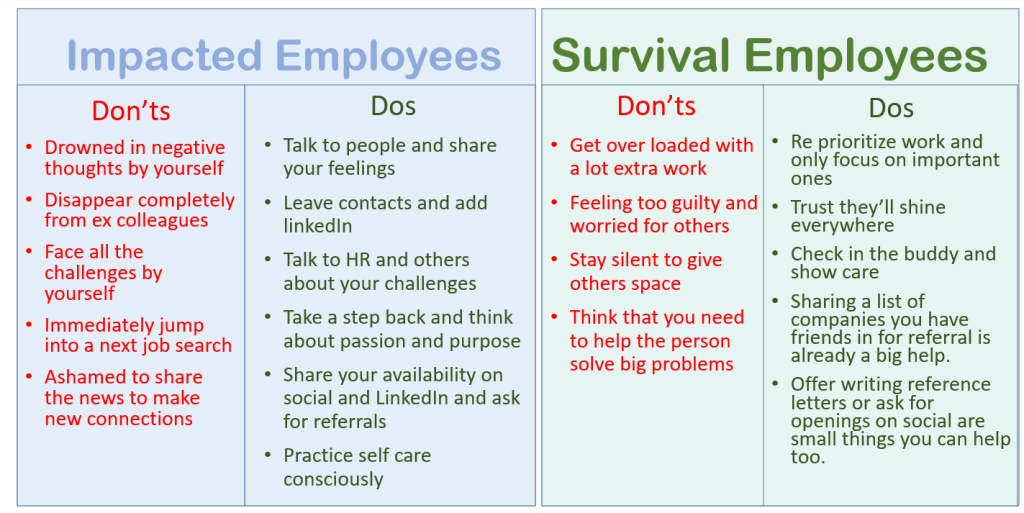
Everyone is different, so the time you need to accept the situation and move on varies greatly among individuals. These Dos and Don’ts might help you navigate through the mists more systematically.
Don’t disappear completely from your colleagues, others may care about you and would be able to have resources for you. Take some time to absorb the Stage 1 feelings (Anger etc), and allow yourself to say goodbye & leave contacts to continue make friends. Add them on LinkedIn asap. You never know your path would cross again; the world is small. In some situations your access to the company network might be cut soon after the announcement, so take the chance to connect or leave some contacts as quickly as possible. (Don’t forget to move your personal files off your work computer as soon as you get the news too. )
Don’t immediately jump into a job search. (Different story for those who are having visa constraints or with immediate financial difficulties.) If possible, allow yourself some time to take a quick break, read a book, do some exercise, and think about what a better/dream life could be like. The previous job might not be the ideal for you, so take the chance to dream about an ideal job or environment first, and then start your next job search which could potentially support your dream (or create your own company and start your own project).
Don’t fear about being judged by your colleagues or friends. (Those who would judge you are not the people you need to care.) Sincerely tell others when you’re ready to move on for a new job or your new project, and appreciate if others could lend some help for referrals of opportunities, writing reference letters, linking potential partners and resources etc. Share your availability on social network, LinkedIn, or make a list of the people you’d like to talk to, and potentially could help, and start reaching out! The more people you connect, the more opportunities may come back to you.
It might be hard to go through the difficult time, but when you get it over and look back, you’ll know how resilient you are and may even appreciate the (forced) opportunity to be a better self!
Emotional Stages of Layoff Survivors
Being the ones that survived out of the layoff, you may have a lot of mixed feelings, and usually not the easy ones as well.
Stage 1: Shock, Worried, Fear
You may experience similar shock to find out that the company is undergoing a series of employee elimination. You’re not sure whether the situation would continue and fear that you may be impacted as well. There’s no sense of safety and security. You’re not sure whether the work you’re doing is creating enough business value to keep you staying with the company. You’re worried about your own future.
Stage 2: Survivors’ Guilt
Now you’re more sure that you’re not impacted by the workforce redundancy exercise, you may feel guilty for the ones who were been let go. Maybe you’re not sure whether you should reach out to the person, you may feel embarrassed as you’re worried to make others feel you’re showing off as the survivor. Or maybe you’re just not sure what you could talk to the person to make the person’s situation better. You also don’t feel like sharing anything with the person, as you’re worried any happy things you’re experiencing might make the other feel bad. You may just feel awkward to start a conversation.
One friend told me that after her layoff, her manager didn’t even have a single word with her, this makes her very sad and even angry. While I totally felt this manager might be experiencing survivors guilt/awkwardness, the silence added additional hurt to the individual. Don’t hesitate to reach out even though you can’t change the person’s situation, simply check in to ask about his/her situation would make the person feel warm under this vulnerable occasion. You lost a colleague but you don’t want to lose a friend, the world is small.
Stage 3: Added work scope & Acceptance & Move On
How can you take care of yourself?
Sometimes even though there’re less people, but workload may remain the same. For the existing people it naturally means more work at individual level. This creates anxiety and stress. Take the chance to reflect what is doing well in the company and what doesn’t, and what needs to change. Also take a step back to reassess all the work, re-prioritize and only focus on the most important things to be done.
Practice self care consciously, you may not realize it but these kind of emotional processing is very energy consuming. Treat yourself a good meal, go for a quick trip, or spend some good time with families or friends.
Also start thinking about you Plan B in life. One job doesn’t necessarily give you all feeling of safety and security, but think about what your passion and dream is, and plan how you can develop the skills within your current job or outside of the job. Also make sure you save some money to survive at least 3 months without a job.
What can you do to show care to others?
Check in! You don’t have to solve the problem for the person, simple checking in would make the person feel warm that people still care. Talk about their feelings, this helps them feel being understood and being supported.
Trust. Feeling too guilty simply means you’re not trusting the person enough. A talented person would be able to shine anywhere. Going through these kinds of difficulties only make them more resilient and better. (I have a friend who lost her husband 5 years ago and we felt so worried about her at that time. But the growth she had in the past years together with her two kids is the most touching thing I’ve ever experienced. Now she tells me, once you’ve gone though the most difficult thing in life ever, you’ll not be afraid of anything any more. ) People are resourceful, and we have to trust each other.
Lastly, if you can, lend some help as much as you can, whichever you’re comfortable with.
- You can post about the layoff in your network and sincerely ask your network to reach out if they have openings.
- You can help to create reference letters or make recommendations on social network or LinkedIn.
- You can also provide the person a list of companies where you have network in, and offer to help the person for a referral if he/her has an interested role in that company. We managed to help the impacted person with interviews in the first week as we helped to get referrals from our network for everything he/she is interested in.
- You can create a Help Group/Support Group to link resources for the impacted. Eg. we created a WhatsApp group with the impacted people + the non impacted people, to help connect the resumes to companies where we have friends there for a referral.
- Offer space / room if you have extra for accommodation.
Ultimately helping others is helping ourselves, the world is round, and one day we’ll need help as well.
What are the better ways for companies to manage layoff?
On top of offering an acceptable severance package, these things might make the layoff process adding more personal touch:
- Provide an option for people who volunteer to leave first.
- Provide an option for people to volunteer to work part time.
- Provide an option for longer term sabbatical leaves.
- Provide some flexibility for people who have challenges with visa, insurance etc.
The way these impacted employees is treated directly impacts the remaining workforce. And those impacted employees could be potential future business partners as well. Treat the people with the most respect is never a bad strategy.


Feel free to subscribe to my future updates below.
 A Growing Me
Leave a comment